
Written in an entertaining laid-back style that more business books could use and – above all – surprisingly relevant over 25 years after first publication in 1991.
Philip Tetlock – Superforecasting
While containing valuable advice, the book does not go much beyond the basic market research toolkit I’d expect any strategy consultant to possess.
Kevin Kelly – The inevitable
Enjoyable, yet somewhat theoretical, meandering between fundamental truisms and gross simplicications, leaving the reader with one key question: ‘Where does it pay off to act contrarian?’

Scott Carney – What doesn’t kill us
The quest of a journalist overcoming his initial scpeticism and transforming from a coach potatoe into a survival adept, who walks up mount Kilimajaro bare-chested and loses his initial stance as an objective observer.

Yuval Noah Harari – Homo Deus
Strongly opiniated view on the future of humanity, mostly valuable due to the emphasis on the role of humans in steering development of technology and AI.

Mel Robbins – The 5 second rule
Counting back from 5 to 1 and then ‘go’ is a useful mind trick that helps to bypass inertia.
Entertaining proponent of the emerging trend of ‘self re-programming’ within ‘self help’, leveraging scientific insights from fields such as neuro science and behavioral economics to train the mind.
Adam Grant – Give and take
In order to be successful, ‘givers’ have to be smart about how they direct their giving.
Remarkable how social environment and incentives can shape giving/taking behavior of individuals.

Deborah Blum – The poisoner’s handbook
Treasure trove of slightly lugubrious annecdotes on crimes, accidents and government schemes.
Ben Horowitz – The hard thing about hard things
Comfortingly desillusional perspective on entrepreneurship, with reassuring insights like: “No one cares.”
Stanislas Deheane – Consciousness and the brain
Fascinating read about how much progress has been made on the path initiated by Daniel Dennett in “Consciousness explained”.
Michael Smith – Streaming, Sharing, Stealing
Recent move of Disney to boycot Netflixs proves that incumbents are starting to realize the new reality.
Yuval Noah Harari – Sapiens
Refreshing evolutionary perspective, emphasizing the cognitive, agricultural, and industrial revolutions as turning points in human development.

Naomi Klein – No is not enough
Solid analysis of politics and mass communication ends in a disappointingly polarized plea for “us v. them”-thinking.
Pedro Domingos – The master algorithm
The brave attempt to cover an inherently deep subject in a non-technical way.

Richard Evans – The pursuit of power
Masterful balance between major developments and impact on human scale.

Martin Lindstrom – Small data
The author suggests a (false) dichotomy between small and big data.
Ashlee Vance – Elon Musk
Do not read the Dutch translation: Henk Popken did a crappy job.
Philip Fernbach and Steven Sloman – The Knowledge Illusion
In a world that is both complex and polarized, progress (which is fueled by sharing knowledge) is in serious danger of reversal.
The concept is almost trivial (which makes for a boring 1st half of the book), but the examples (partizan politics, fake news, pseudo science, etc.) are convincing and entertaining.
Clayton M. Christensen – Competing against luck
Good thought starter and a great tool to point out failures afterwards, but usually hard to get “the job” right before launch
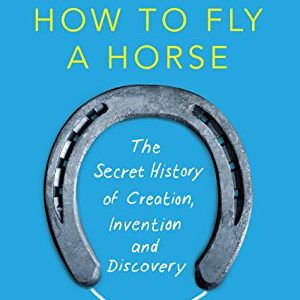
Kevin Ashton – How to fly a horse
Unfortunately, the book contains too many anecdotes that feature Woody Allen.