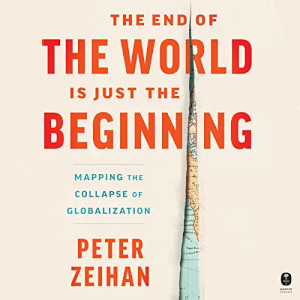
Peter Zeihan – The end of the world is just the beginning
Highly entertaining read with a lot of black humor, but incomplete in its analysis (e.g. of risk of internal conflicts in the USA and likelihood of collaboration between states in Europe).
Peter Zeihan – The end of the world is just the beginning
Highly entertaining read with a lot of black humor, but incomplete in its analysis (e.g. of risk of internal conflicts in the USA and likelihood of collaboration between states in Europe).
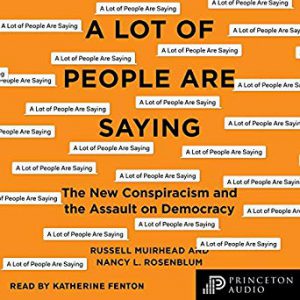
Russel Muirhead and Nancy Rosenblum – A lot of people are saying
January 2020: The book spells out the scary power of herd mentality in a post-truth world (indebted to Harry Frankfurt and Fernbach and Sloman).
March 2022: In the perspective of this book, it is curious to see how far Putin can stretch his narrative on the Ukraine invasionfor his domestic audience.
John Green – The anthropocene reviewed
Although the book is charming at times, reviewing an era through the personal experiences of one arbitrary writer in the early 21st century is a lost cause right from the start.
Highly entertaining book, providing entertaining facts and refreshing perspectives.
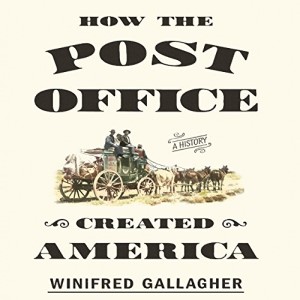
Winifred Gallagher – How the post office created America
In theory a fascinating topic, but in practice a boring read; as I should have expected because the Post leveraged rather than drove innovation.
Christiane Lemieux and Duff McDonald – Frictionless
Story on repeat: X had a frustration, X is so privileged that she can raise at least a couple of $100k from friends and family, and X starts an amazing company to solve the problem – at least in theory – for herself and the rest of the world.
Dinny McMahon – China’s great wall of debt
October 2021: Apparently, the financial troubles of Evergrande are the first cracks in the wall.
July 2019: Interesting perspective on China’s impressive rise over the past years, providing more context to the recent trade war with the US and contrasting the view of Kai-Fu Lee.
Entertaining and endearing, despite the writers (sometimes painful) personality flaws
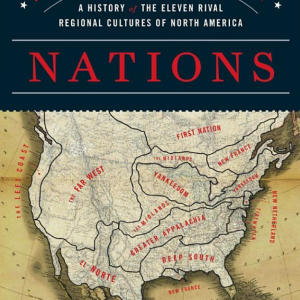
Colin Woodard – American nations
The book is more about political realities than about cultures, with little attention given to the role of black people (apart from them being enslaved).
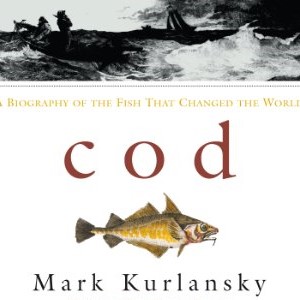
Everything you always wanted to know about the economic, cultural, historical, and culinary significance of cod.
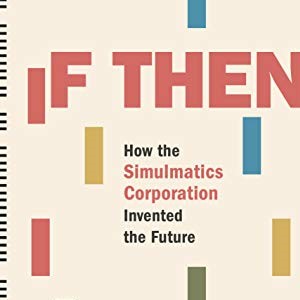
The writer never really succeeds in making the Simulmatics story seem important, partly because due to endless digressions about the bad marriages of the men who founded the company and partly because she avoids any substantial assessment of the actual models they used.
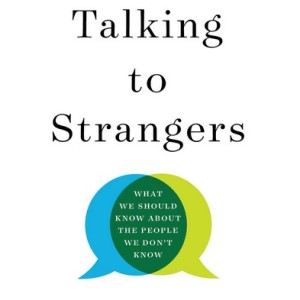
Malcolm Gladwell – Talking to strangers
Gladwell once more makes his well known point that prejudice is often subconscious and institutionalized (cf. also Blink), this time inspired by a BLM atrocity.
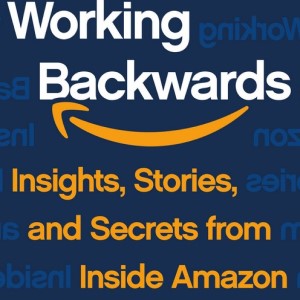
Colin Brayer and Bill Carr – Working backwards
Somehow, there is no mention of pee bottles or other excesses concerning operational staff in the book.
The purposeful one-sided rant makes the book lose all credibility, in particular since the arguments can easily be reversed – especially in the wake of Trump’s desperate challenge the US election outcome.
Jonathan Rodden – Why cities lose
In the US election system, geographic concentration puts democrats at a fundamental disadvantage.
Justin Fox – The myth of the rational market
The book resists the temptation to get lost in juicy stories, but focuses on the evolution of ideas.
Daivd French – Divided we fall
January 2021: After the Capitol attack (6 Jan. 2021) it became clear how close we actually were to this type of scenario.
November 2020: The hypothetical scenarios are well crafted and unfortunately not as far-fetched as one might hope.
Good diagnosis of current monetary policy, but combined with a disappointingly naive belief in the free market as panacea.
Michael Lewis – The Fifth Risk
The book should be mainly read for the anecdotes on female astronauts and nerdy coast guards.
Michael Beschloss – Presidents of war
In choosing the personal perspective of the leader, makes the book prone to the narrative fallacy.