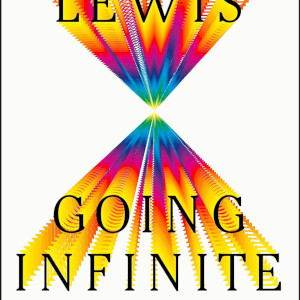
Michael Lewis – Going infinite
Amazing story, told with a consistent yet not so surprising perspective
Michael Lewis – Going infinite
Amazing story, told with a consistent yet not so surprising perspective
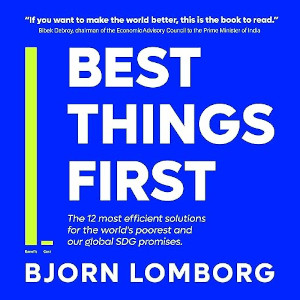
Bjorn Lomborg – Best things first
Nice exercise that provides some nice contrarian thinking, as long as one is aware that the methodology of cost-benefit analysis (as applied here) seems to ignore systemic risks (e.g. climate change) and under-plays the difficulty of getting from theory to policy (let alone realization).
The story is, appears heavily romanticized, but provides a nice insider perspective on many quirks of Japanese culture.
Benjamin Lorr – The secret life of groceries
Narrated with bravado, the book conjures the nostalgic image of a 1950s store and skillfully contrasts it with the current state of the industry.
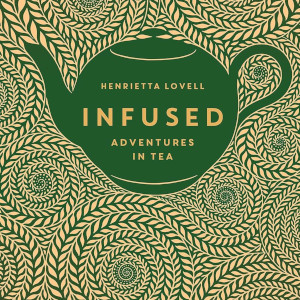
An impressive book that takes tea sufficiently seriously, serving valuable recommendations on teas to try and pairings to explore.
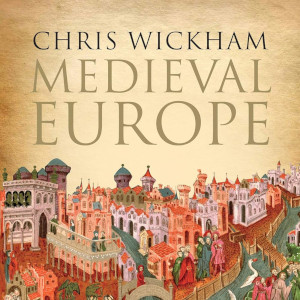
Chris Wickham – Medieval Europe
Rich and fascinating deep-dive into an under-estimated millennium.
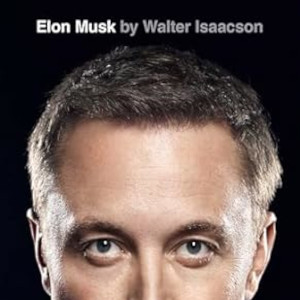
Even if multiple views are presented, Elon’s perspective gets most airtime and the final word; which makes the book read like a hagiography.
Reading like a writer – Francine Prose
Lot of examples of great prose, but too few examples of bad writing.
The author set out on a daunting program with impressive results in a fascinating domain.
Mike Pitts – How to build Stonehenge
The book reads as a detective, exploring what we know and what we can reasonably conjecture about the creation of Stonehenge based on the archeological record and examples from indigenous civilizations.
Malcolm Hislop – How to build a cathedral
Fascinating in the thorough treatment of technical details of architecture and construction.
The book continues to drift between wonder about the world and weakly motivated bias towards human scale, which is a pity because it cites some elegant analyses.
Claire Maingon and Hélène Rochette – Le grand guide de la Normandie (in French)
Charming take on a tourist guide, revisiting the favorite spots of impressionist painters to recreate their magic.
Kate Fox – Watching the English
Light read with amusing observation, stretched out over slightly more pages than necessary to convey the message.
Theo Mulder – De hersenverzamelaar (The brain collector, read in Dutch)
The book is mostly written from the historical perspective free from contemporary judgements, which allows the writer to tell a nuanced story on a sensitive topic.
A brave attempt to put up a framework for assessing technological innovations, that is rich of ideas, which are in many cases [in 2023] still relevant (e.g. Cognifying in the light of GenAI), but sometimes feel out-dated (e.g. Sharing is a post-truth world).
The author underplays the role of religious power structures in suppressing novel scientific ideas that go against traditionalist dogmas, which makes the book read more like a christian apology than a balanced historical narrative.
David Abulafia – The great sea
The best parts are the details (e.g. on laws governing responsibilities at sea in medieval times), but these facts buried in a thorough, impressively complete historical overview.
Mariana Mazzucato and Rosie Collington – The big con
The book paints a naive caricature of the consulting industry, downplays the role and responsibility of other actors and, unfortunately, lacks a realistic alternative for flexibly solving skill and capacity deficits (especially in the public sector); thereby undermining any justified concerns.
Jamie Kreiner – The wandering mind
The book loses a lot of specificity and power due to the suppression of differences in denomination and gender and even more because the writer does not really seem to have a clear point to make.