
Slavoj Zizek – Like a thief in broad daylight
Mix of interesting Marxist perspectives on contemporary politics and confusing rants about old movies.
Slavoj Zizek – Like a thief in broad daylight
Mix of interesting Marxist perspectives on contemporary politics and confusing rants about old movies.
Maxine Bedat does for fashion what the Michael Pollen did for food, but with a much more solid program behind it.
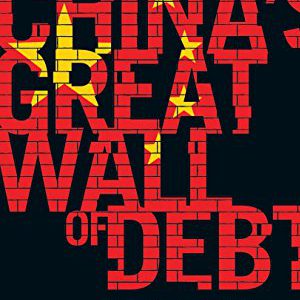
Dinny McMahon – China’s great wall of debt
October 2021: Apparently, the financial troubles of Evergrande are the first cracks in the wall.
July 2019: Interesting perspective on China’s impressive rise over the past years, providing more context to the recent trade war with the US and contrasting the view of Kai-Fu Lee.
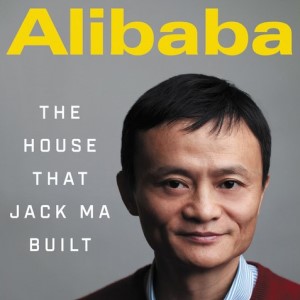
After a reasonably insightful chapter describing Alibaba’s strategy, the book slides into an enumeration of facts that illustrate the way in which China’s government steers private enterprise.
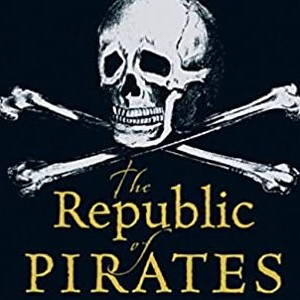
Colin Woodart – The republic of pirates
Captivating narrative which juicy details on naval warfare practices and life on board.
Daryl Collins – Portfolios of the poor
Thorough application of small data that provides valuable insight in how people live on less than 2$ a day – and what that implies for microfinance.
Justin Fox – The myth of the rational market
The book resists the temptation to get lost in juicy stories, but focuses on the evolution of ideas.
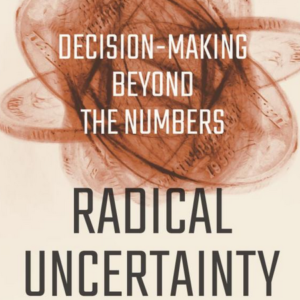
John Kay and Mervin King – Radical Uncertainty
Economists should stay away from pseudo-philosophical assertions, in particular when these hinge on misinterpretation of Bayesian methods, use flawed logic, and do not lead to realistic recommendations.
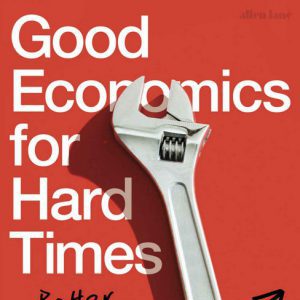
Abhijit V. Banerjee and Esther Duflo – Good economics for hard times
Smart agent-based modelling perspective on global challenges around poverty and sustainability.
The great leveler – Walter Scheidel
Next to revolution (in the spirit of Marx), the book claims there are just three other forces strong enough to achieve leveling: mass warfare, epidemics, and system collapse (the last of which is arguably overlaps with the others).
the set-up in which interesting historical facts serve to make a political argument makes the author prone to the narrative fallacy.
Jan-Benedict Steenkamp and Laurens Sloot – Retail disruptors
Generally solid overview of retail business economics using hard discounter in grocery as case examples, but the authors could not risist the urge to make overly general assertions.
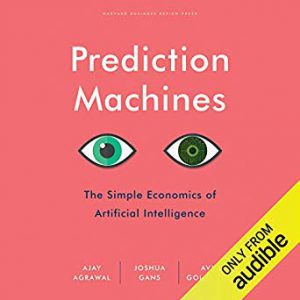
Ajay Argawal, Joshua Gans, Avi Goldfarb – Prediction machines
The authors see AI as just a new option for the division of labor which, although it can have rather dramatic consequences, does not support apocalyptic GAI fearmongering.
Kate Raworth – the doughnut economy
The idea of challenging the implicit assumptions of traditional economics is not new, yet the emphasis on framing the debate is valuable.
At first the polemic style is charming, but over-all the writer’s objective to crush the system by his brain power is poorly executed and overlooks too many credible alternative lines of argument.
Skin in the game – Nassim Nicholas Taleb
Written in Taleb’s highly entertaining style, at times overly cocky but with more than enough wisdom to make up for it.
Elegant mix of historic analysis of market dynamics and experiments with natural selection in non-biological context.